
Crude awakening
15th May 2026
In October 1973, the Arab members of OPEC announced an oil embargo against the United States and its Western allies in retaliation for their support of Israel in the Yom Kippur War. Within months, the price of oil had quadrupled. The UK government introduced a three-day working week. Inflation, already rising, became entrenched for the rest of the decade. The 1973 oil shock both rattled markets and reshaped the global economic order.
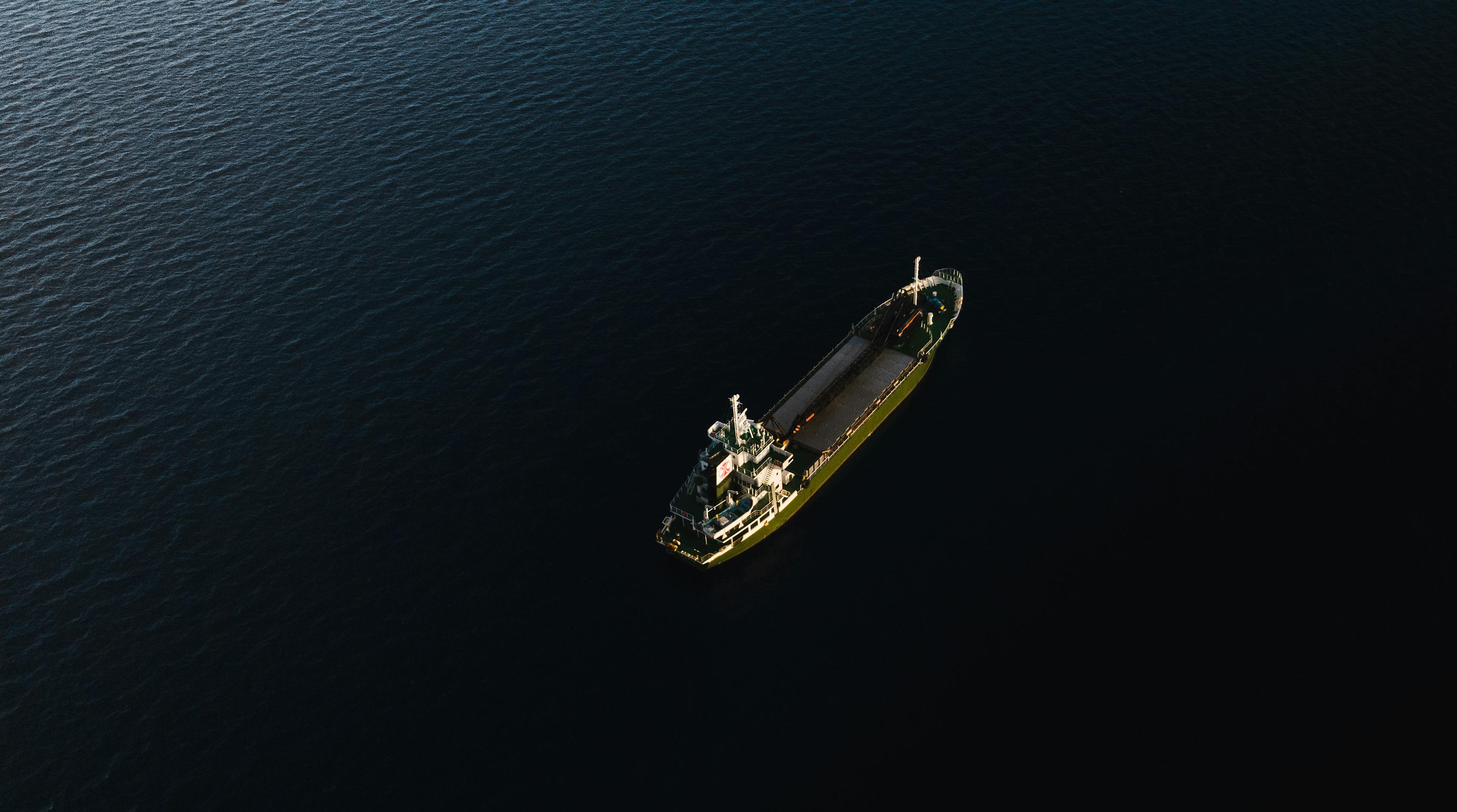
More than 50 years on, the world is again watching a Middle East conflict ripple outward through energy markets. The joint US-Israeli strikes on Iran on 28 February 2026, which killed Supreme Leader Khamenei and triggered Iran’s closure of the Strait of Hormuz, produced what the International Energy Agency described as the largest supply disruption in the history of the global oil market.¹ Brent crude, around $70 a barrel before the strikes, surged past $119 at its peak in mid-March before retreating toward the low $90s as a fragile ceasefire took hold in April.² The uncertainty has far from dissipated.
History tells us that oil shocks and geopolitical crises in the Middle East are not new, and that they are, in time, resolved. Understanding what makes this episode different from previous ones is central to thinking clearly about what it means for portfolios.
What history tells us
The 1973 embargo and the 1979 Iranian Revolution were the two defining oil shocks of the 20th century. Both were sudden and severe enough to trigger recessions. Both were eventually resolved through new supply, demand destruction and diplomatic accommodation.
The 1990 Gulf War produced a sharp but short-lived spike – prices nearly doubled between July and October before retreating almost as quickly once the conflict ended. The lesson from 1990 was that markets can overshoot dramatically in the short-term, then normalise faster than pessimists expect.
The Russia-Ukraine conflict in 2022 produced another sharp energy shock, with Brent crude briefly touching $128 a barrel in March of that year.³ That episode is the most recent and instructive comparator and it is worth examining carefully, because today’s environment is materially different.
Today versus 2022
When Russia invaded Ukraine, the macro backdrop was fraught. Inflation was already running hot with US and UK inflation sitting at 7.5% and 5.5%, respectively. Central banks had barely begun raising rates, the Fed Funds Rate was effectively zero, and fiscal positions were stretched after the pandemic.4
Today the starting point is more resilient. Inflation has been brought more under control. Interest rates are no longer near zero, meaning policymakers have room to respond in either direction. Government balance sheets, while mixed, are not in the same precarious condition as in early 2022. The table below compares the status across inflation, unemployment, and central bank rates. In sum, the system absorbing this shock has considerably more capacity than the one that faced the Ukraine crisis.4
| Inflation Rate | Feb ‘22 | Feb ‘26 |  |
|
| US | 7.50% | → | 2.40% | ● |
| Eurozone | 5.10% | → | 1.90% | ● |
| UK | 5.50% | → | 3.00% | ● |
| Unemployment Rate | ||||
| US | 4.00% | → | 4.40% | ● |
| Eurozone | 6.80% | → | 6.10% | ● |
| UK | 3.90% | → | 5.20% | ● |
| Central Bank Rate | ||||
| US | 0.13% | → | 3.63% | ● |
| Eurozone | -0.50% | → | 2.00% | ● |
| UK | 0.50% | → | 3.75% | ● |
Source: Fed, ECB, BoE, IMF
There is a further distinction. In 2022, Europe’s acute vulnerability stemmed from its dependence on Russian piped gas – a supply that could not easily be rerouted. The current disruption hits a more diversified global energy market, and one in which the US, as the world’s largest oil producer, is largely self-sufficient. That matters for global price dynamics, even if it does not fully insulate the UK from a commodity price shock.
Assessing the economic impact
The honest answer is that we are still in the middle of this. Even a lasting agreement to reopen the Strait of Hormuz is unlikely to normalise shipping flows quickly, given damaged infrastructure and tanker operators’ understandable reluctance to resume normal transit until stability is assured.
Higher oil prices feed through into fuel costs, transport and (with some lag) broader consumer prices. The Bank of England and other central banks will be watching carefully. If the spike proves sustained, the path to further rate cuts narrows. UK inflation re-accelerating is not the core expected outcome, but the risk is not negligible either.
On the question of recession, the picture is nuanced. If oil prices hold around current levels, global growth could face a modest headwind and inflation may tick higher, but this is a far cry from the shocks of the 1970s. For the UK, the risk of a technical recession has risen and should not be dismissed, but it remains more of a possibility than a probability.
How might this end?
We do not know, and it is important to acknowledge that. By 1991, the Gulf War had ended quickly, with energy markets recovering faster than expected. The 1973 embargo was lifted within months. The 1979 and 1980 Iran crises, by contrast, produced prolonged disruption.
What we do know is that the incentives for resolution are strong. Iran’s economy, already severely damaged by sanctions, has been further destabilised by the conflict.⁶ Gulf states want energy flows restored. The US has signalled it wants a deal. None of this guarantees a swift outcome, but the path toward one exists. The oil price falling sharply toward $90 the moment ceasefire talks came into view illustrates just how sensitive markets are to any hint of de-escalation.2
What does this mean for portfolios?
Long-term returns are determined by strategic positioning, rather than attempts to time geopolitical events. Exiting the markets in October 1973, September 1990, or March 2022 would have locked in losses and missed the subsequent recovery. The sharp rebound in US equities since the initial sell-off has rewarded those who held on and penalised those who tried to trade around the conflict.
Yet the character of this recovery warrants some caution. The advance has many hallmarks of an unloved rally – light volumes, narrow breadth, a small group of stocks leading the charge. One measure of investor sentiment has actually declined even as stocks have surged, a combination seen in only five other instances over the past twenty years.⁷ That is an unusual signal. It suggests markets may be pricing in a swift, clean resolution that is not yet assured, and that further volatility on the path to one remains entirely possible.
This is not an argument for dramatic repositioning. It is an argument for maintaining a portfolio already built to absorb shocks. Our allocation to gold has performed well as a store of value throughout this period. Our bond positioning, broadly neutral on duration, reflects the genuine two-way risk on interest rates. Our equity diversification across regions and sectors avoids concentrating in any single point of risk and has benefitted from the optimism within Asia and Emerging Markets.
We are monitoring the situation closely and will review positioning if the outlook shifts materially. Until then, we continue to follow our core philosophy of staying invested and remaining calm – a strategy that has successfully served clients through many years and crises before.
If you have any questions on the above or to find out more about our investment service, please call 020 7287 2225 or email hello@edisonwm.com.
Important information
This insight piece does not constitute advice.
The value of investments and the income arising from them can go down as well as up and is not guaranteed, which means that you may not get back what you invested. Past performance is not necessarily a guide to the future.
Sources:
Table – IMF, Fed, ECB, BOE. Data as of 31 March 2026.
- International Energy Agency, March 2026. The IEA described the Strait of Hormuz closure as the largest supply disruption in the history of the global oil market.
- Associated Press, April 2026. Brent crude peaked above $119 a barrel on 19 March 2026 before falling back below $91 on 18 April as Iran signalled the Strait was open during the ceasefire period.
- Brent crude reached $128 a barrel in March 2022 following Russia’s invasion of Ukraine.
- P. Morgan Asset Management. Comparison of key macroeconomic indicators as at 24 February 2022 versus 27 February 2026.
- P. Morgan Global Research, March 2026. Estimates based on a scenario in which Brent crude remained around $80 a barrel through mid-2026.
- Al Habtoor Research Centre. Iran’s economy had experienced inflation exceeding 40% in 2025 prior to the conflict; the war intensified those pressures significantly.
- Barclays, April 2026. Barclays investor sentiment indicator; there have been only five instances in the past 20 years where the indicator declined during a sharp equity market recovery.
Edison Wealth Management Limited is authorised and regulated by the Financial Conduct Authority. The company is registered in England and Wales and its registered address is shown below. The company’s registration number is 06198377 and its VAT registration number is 909 8003 22. The Financial Conduct Authority does not regulate tax planning or trusts.
The information contained within this insight piece is based on our understanding of legislation, whether proposed or in force, and market practice at the time of writing. Levels, bases, and reliefs from taxation may be subject to change.
<< Back to Insights

Contact us to see how we can help.
+44 (0) 20 7287 2225
hello@edisonwm.com
The value of investments and the income arising from them can go down as well as up and is not guaranteed, which means that you may not get back what you invested. Past performance is not necessarily a guide to the future. The information contained in this website does not constitute advice. The FCA does not regulate tax advice. The FCA does not regulate advice on Wills and Powers of Attorney. The Financial Ombudsman Service is available to sort out individual complaints that clients and financial services businesses aren’t able to resolve themselves. To contact the Financial Ombudsman Service please visit www.financial-ombudsman.org.uk.